
Attaching a headboard to a bed frame can completely change the look of a room and can form part of a broader specification update, particularly in commercial settings where consistency across rooms matters. Traditionally though, this process can be time consuming and often leaves visible fixings or limits access for future changes. In this guide, we’ll compare conventional headboard mounting methods with Fastmount’s innovative hidden clip system. It’s a solution that delivers a clean, secure, and easily removable finish — the preferred solution for interior designers, millworkers, and commercial fit out specialists who need a clean, repeatable, and removable headboard fixing across multiple projects.
Looking for something specific? Use the table of contents to jump straight to the headboard mounting method, installation guidance or project information you need.
Frequently Asked Questions
What is the best way to mount headboards in a hotel fit out?
For hotel fit outs, wall mounting with Fastmount’s Very Low Profile Range (VL-03, VL-03H, VL-M3X) is generally the preferred approach. It supports efficiency by allowing headboards to be removed non-sequentially for deep cleaning or maintenance, while a two-part epoxy adhesive fixing keeps installation disruption to a minimum in occupied guest rooms. For higher traffic or heavier headboard applications, the Stratlock® Range offers additional load capacity and adjustability, as used across 185 rooms in the NH Collection Milano CityLife Hotel.
How do millworkers and fabricators pre-install headboard clips off-site?
Female and male Fastmount clips can be fitted to the headboard panel and, where applicable, the wall or frame substrate before the components ever reach site. Using the Fastmount Layout Guide (TD-02), clip positions are marked and epoxy-bonded in the workshop, allowing panels to arrive ready for on-site engagement. This reduces on-site installation time and ensures consistent clip placement across multiple rooms which is a significant advantage for large hospitality or multi-unit residential projects.
What clip system do interior designers specify for bespoke headboards?
For bespoke and fabric-wrapped headboards, designers typically specify Fastmount’s Textile Range, which is purpose-built for upholstered and fabric-wrapped applications. It provides a secure, hidden attachment that avoids the pressure points and visible hardware associated with traditional upholstery fasteners. For rigid or wood-panel headboards, the Very Low Profile Range (VL-03, VL-03H, VL-M3X) is the standard specification, offering the same fully hidden fixing without disturbing the panel finish.
What load rating should I specify for a commercial headboard mounting system?
Load rating depends on headboard weight, size, and substrate. Standard VL-03 clips suit most light commercial and residential headboards, while VL-03H clips are rated for heavier headboards where standard brackets might otherwise fail. For large scale or highly loaded commercial installations, the Stratlock® Range offers higher load capacity along with adjustability to compensate for uneven substrates. Fastmount’s technical team can confirm exact load ratings for a given project specification.
Why specify a headboard in a commercial or hospitality project?
For commercial and hospitality projects, the choice to specify a headboard, and how it’s mounted, affects guest experience, room maintenance costs, and the overall finish of a property.
Design Impact
A headboard adds height, visual interest, and a sense of design intent to a room. This is an important consideration when a hotel suite, serviced apartment, or residential development needs to reflect a client’s or brand’s identity consistently across many rooms.
Maintenance and durability benefits
Beyond aesthetics, a headboard acts as a barrier between the bed and the wall, reducing scuffs, marks, and general wear that add to maintenance costs across a portfolio of rooms, while also helping anchor the bed in place during regular use.
Added functionality
Headboards can incorporate features such as shelving, compartments, or integrated lighting, adding functionality without compromising the room’s finish which is a common requirement in hospitality and multi-unit residential specification.

Can a headboard be attached to any bed frame?
Most headboards can be attached to any bed frame with the right mounting system, and Fastmount makes this possible across almost any bed frame type used in commercial or luxury fit outs. Whether you’re working with timber, metal, or platform beds in hotels, serviced apartments, or high end residential projects, Fastmount’s clip system offers a concealed, secure, and removable fixing solution.
The key advantage lies in Fastmount’s universal compatibility. No matter the frame material or design, Fastmount’s clip systems provide professional mounting that retains aesthetics while ensuring durability. And in addition to this, updates can be made repeatedly with the integrity of the clips not compromised. These are essential qualities for commercial installations where performance standards are critical.
For designers and commercial installers who regularly work with varied bed frame types, this adaptability eliminates the need for multiple mounting solutions or complex modifications, streamlining the installation process across different projects.
Things to consider before attaching a headboard to a bed frame
Before you start, consider these important factors to ensure a secure and professional looking installation.
Type of headboard
You can choose between freestanding, frame mounted, or wall mounted headboards. Freestanding options offer flexibility and easy updates, while frame mounted and wall mounted headboards provide more stability and a seamless look.
Bed frame material
The material of the bed frame (metal, wood or platform) affects which attachment methods and hardware will work best. For example, metal frames often require bolts or brackets, while wooden frames may use screws or specialized clips.
Mounting hardware
Identify the necessary hardware for the particular bed type you have. This could include brackets, screws, or innovative solutions like Fastmount clip systems which offer hidden, secure, and easily removable panel mounting.
Wall type (for wall mounting)
If you’re mounting your headboard to the wall, consider the wall’s construction (e.g. plasterboard, concrete, or brick) as this will determine the type of anchors and fasteners required for a safe installation.
Headboard height, width, and weight
Make sure your headboard’s dimensions and weight are compatible with the bed frame or wall, and that the mounting method can safely support it without compromising stability or aesthetics.
Which clips or brackets do I need to mount a headboard?
When searching for headboard mounting hardware, you’ll encounter several types of brackets and fasteners. Understanding what’s available helps you choose the right solution for your project.
Standard hardware for residential headboard installation
The following hardware is typically used for residential headboard installations:
- Universal headboard hardware: Adjustable metal brackets that adapt to various bed frame types
- Headboard bolts: Standard 5/16” threading bolts (older frames) or M8 x 1.25 bolts (newer metric frames)
- Headboard mounting screws: Wood screws for attaching to wooden bed frames
- Wall attachment systems: Heavy duty brackets for wall-attached headboards
- French cleat systems: For securing heavy headboards to walls
This hardware is widely available and commonly specified for residential installations. However, it creates visible fixings that can detract from high end or commercial-grade finishes.
Commercial and contract-grade headboard mounting systems
Fastmount’s clip systems replace traditional headboard brackets and fasteners with completely hidden solutions designed for commercial and luxury applications:
- VL-03 clips: Hidden female clips that replace visible fixings
- VL-M3X clips: Male clips that eliminate the need for visible bolts
- VL-03H clips: High strength option for heavy headboards where standard brackets might fail
These clips are compatible with timber, metal, MDF, and plasterboard substrates, with load ratings ranging from standard duty (VL-03) to high strength (VL-03H) for heavier headboard constructions. Fastmount’s system addresses the core problems with traditional headboard fasteners — visible hardware, difficult removal, and alignment issues, while providing superior performance for professional installations.
The challenges of traditional headboard mounting
Visible fixings and limited flexibility when attaching a headboard to a bed frame
Traditional headboard mounting methods typically rely on screws, bolts, or brackets, which often leave visible hardware that detracts from the clean lines and overall look of a bedroom space. Once installed, these fixings make it difficult to remove or reposition the headboard without causing damage to the wall or bed frame. So your ability to refresh a room or perform maintenance is limited.
Attaching a headboard to a bed frame can be time consuming
Aligning holes and hardware for headboard attachment can be fiddly and slow. Depending on the bed frame type (metal, wood, or platform), you may need unique hardware, and retrofitting or upgrading to a new headboard often means starting the entire installation process from scratch, adding time and complexity to the task.
Maintenance and access issues with traditional headboard mounting
Fixed headboards attached with traditional methods can make it challenging to access wiring, wall surfaces, or perform repairs behind the bed. Any maintenance or updates can be disruptive and may risk damaging the finish of the walls or headboard, making ongoing care and flexibility a persistent challenge.
How to attach a headboard to a bed frame using traditional methods
The following is a quick overview of how to attach a headboard to different types of bed frames (metal, wood, or platform), using traditional methods. These methods are widely used but can be time consuming and may leave visible fixings.
How to attach a headboard to a metal bed frame
- Move the bed away from the wall to gain access to the headboard end.
- Metal bed frames usually have pre-drilled holes at the end for a headboard attachment. Check that the headboard’s brackets or legs align with these holes.
- If the holes don’t line up, use universal headboard brackets, which can be adjusted to fit a range of headboard styles and frames.
- Position the headboard so its mounting points line up with the frame’s holes or the brackets. Insert bolts through the holes, add washers if needed, and thread on the nuts.
- Use a wrench or pliers to tighten the bolts evenly. Check that the headboard is centered and sits flush against the frame. Tighten all bolts fully to prevent wobbling.
How to attach a headboard to a wooden bed frame
- Move the bed away from the wall for easier access to the frame and headboard.
- Choose wood screws or bolts that are appropriate for the thickness of the wooden frame and headboard. Some headboards may come with their own mounting hardware.
- Position the headboard so its legs or mounting brackets are flush with the frame. Mark the screw holes if you need to drill new ones.
- If the frame doesn’t have pre-drilled holes, use a drill to make pilot holes for the screws. This helps prevent the wood from splitting.
- Attach the headboard using screws or bolts, tightening them evenly. Check that the headboard is level and sits flush against the frame. Avoid overtightening to protect the wood finish.
How to attach a headboard to a platform bed frame
- Slide the platform bed several feet away from the wall to create enough working space at the head of the bed.
- Check the bed frame for any existing mounting holes or brackets. Many platform beds don’t have these, so you may need to use universal headboard brackets or consider wall mounting.
- If the frame lacks mounting points, attach universal headboard brackets to the side rails using the recommended screws (typically ¾ inch wood screws). Follow the bracket manufacturer’s instructions for placement and attachment.
- If the frame doesn’t have pre-drilled holes, use a drill to make pilot holes for the screws. This helps prevent the wood from splitting.
- Attach the headboard using screws or bolts, tightening them evenly. Check that the headboard is level and sits flush against the frame. Avoid overtightening to protect the wood finish.
How to attach a headboard to a bed frame using Fastmount
Fastmount’s hidden clip system offers a modern alternative to traditional headboard attachment, delivering a secure, invisible, and easily removable connection. Whether you are a designer, millworker, or commercial contractor, Fastmount’s method is straightforward to specify and install.
The advantages of choosing Fastmount when attaching a headboard to a bed frame
Hidden, secure fixing: Fastmount clips are recessed and completely invisible from the finished side, ensuring the headboard has a clean look. Unlike traditional screws or brackets, there’s no visible hardware to detract from your design.
Easy removal: One of Fastmount’s best features is the ability to remove and refit headboards without damaging the wall or frame. This is perfect for maintenance, cleaning, or redesign, especially in commercial or hospitality settings where access and flexibility are important.
Perfect alignment: Fastmount’s CentrePoint and layout guides make installation precise and straightforward. These tools help you mark and position the clips accurately, guaranteeing the headboard is always perfectly aligned and level.
Versatility: The Fastmount system is compatible with all bed frame types (metal, wood, and platform) and is equally effective for wall mounting applications.
Wall mounting vs. bed frame mounting with Fastmount
Wall mounting headboards is popular in hospitality, multi-residential, and luxury residential projects because it delivers a sleek, space saving design while enabling easy maintenance access. Unlike bed frame mounting, wall mounted headboards create clean design lines and allow for thorough cleaning around and behind the bed which is a critical consideration in serviced apartments.
Wall mounted headboards are particularly valued in:
- Hotel rooms where housekeeping efficiency is paramount
- Apartments and condos where space optimization matters
- Yacht interiors where secure, removable fixtures are essential
- Healthcare facilities requiring easy sanitization access
Fastmount’s clip systems are ideal for wall mounting applications because they provide the strong, hidden, and easily removable connection that commercial projects demand. The ability to quickly remove headboards for deep cleaning, maintenance access, or design updates makes Fastmount the industry choice for professional wall mounted headboard installations.

Best practices for wall mounting headboards:
- Ensure wall substrate can support the headboard weight
- Position clips to align with wall studs or use appropriate wall anchors
- Consider electrical or data cabling that may need future access
- Plan for easy removal and reinstallation during room maintenance cycles
Specifying headboard mounting systems for hospitality projects
For hospitality projects, specifying a headboard mounting system involves more than the fixing method itself. It needs to account for housekeeping schedules, fire safety compliance, and consistency across potentially hundreds of rooms.
Housekeeping access
Headboards should be specified with a system that allows non-destructive, non-sequential removal, so individual rooms can be accessed for deep cleaning or repair without disrupting others or requiring specialist tools.
Fire-rating considerations
Where local fire codes apply to guest room fixtures, confirm that the specified clip range and any adhesive or substrate combination meets the required fire-rating for the jurisdiction and building classification. Fastmount can advise on appropriate range selection for fire-rated applications.
Writing Fastmount into a room specification
Reference the specific clip range and model numbers (e.g. Fastmount Very Low Profile Range, VL-03H) directly in the joinery specification, along with substrate and load requirements, to ensure consistency across contractors and fit out phases.
Multi-room consistency
Using a single, documented clip system and layout guide across all rooms rather than varying hardware by contractor or supplier, ensures a uniform finish and simplifies future maintenance across a property.
This approach is reflected in the NH Collection Milano CityLife Hotel project, where Fastmount’s Stratlock® Range was used consistently for headboards and wall paneling across all 185 guest rooms, rather than varying by room.
Pre-fabricating headboard panels in the workshop before site installation
Millworkers and fabricators can install Fastmount’s female and male clips onto headboard panels in the workshop, well before the panels are delivered to site. Using the Fastmount Layout Guide to mark accurate clip positions, panels can be pre-drilled and clips epoxy bonded under controlled workshop conditions, rather than on site under time pressure. This approach reduces on-site installation time, minimizes disruption in occupied hospitality or residential buildings, and ensures consistent clip alignment across large room counts — an important factor when the same headboard design is being installed across dozens or hundreds of rooms.

Step by step guide to attach a headboard to a bed frame using Fastmount
Equipment and tools needed:
- Fastmount Very Low Profile Range clips (VL-03, VL-03H, VL-03FR, VL-M3X)
- Fastmount installation tools (VL-CP3, VL-SS3)
- Fastmount Layout Guide (TD-02)
- 2-part epoxy adhesive (or screws, depending on substrate)
- Headboard and bed frame or wall substrate
- Drill and measuring tools
Installing Fastmount clips and mounting the headboard
- Using the Fastmount Layout Guide, mark the location of the female clips (e.g. VL-03, VL-03H, VL-03FR) on the bed frame or wall substrate. Space clips evenly, taking into account the size and weight of your headboard.
- Position each female clip at the marked location. Apply 2-part epoxy adhesive to the SuperGroove® system on the back of the clip, then press it firmly into place. For extra security or lateral adjustment, fix with the countersunk stainless steel screw (VL-SS3) through the center hole if required. Allow adhesive to cure fully as per manufacturer’s instructions.
- Use the VL-CP3 center point marker inserted into the female clips to mark the exact drilling points on the back of the headboard. Drill holes to the required depth at each marked location.
- Apply 2-part epoxy adhesive to the back of each male clip (VL-M3X) and press firmly into the drilled recesses on the headboard. Again, allow adhesive to cure fully before proceeding.
- Align the male clips on the headboard with the female clips on the bed frame or wall substrate. Press the headboard firmly until you hear a distinct “click”, indicating the clips are securely engaged and the headboard is mounted flush and stable.
- To remove, simply pull the headboard away from the frame or substrate. The Fastmount system allows for non-sequential, non-destructive removal and refitting, making cleaning, repairs, or design updates simple.
For wall mounted headboards, follow the same basic process with these key modifications:
- Mark female clip locations on the wall substrate using the Layout Guide, ensuring alignment with wall studs or appropriate anchor points
- For solid substrates (timber studs, concrete), female clips can be secured with countersunk screws through the center hole for maximum security
- For hollow wall applications, use appropriate wall anchors rated for the headboard weight plus safety factor
- The male clip installation on the headboard remains identical – drill recesses and secure with epoxy adhesive
- Test the wall mounting by applying gentle pressure before final positioning
Ready to redesign a bedroom space? Discover more about Fastmount’s Very Low Profile Range of clips, and see how Fastmount solutions are being used across marine, architecture, furniture, and recreational vehicle sectors.

How to attach a headboard without drilling or using visible screws
In many commercial projects, drilling into existing frames is either not permitted or not desirable, particularly in heritage furniture, leased installations, or projects with strict maintenance protocols. Fastmount’s Very Low Profile Range offers a professional alternative that eliminates the need for visible hardware while providing secure, removable mounting.
The VL range clips use a two-part epoxy adhesive system that creates a very strong bond without requiring screws through visible surfaces. This approach is ideal for:
- Hotels and serviced apartments where installation disruption must be minimal
- Refits in occupied spaces where drilling restrictions apply
- High end residential projects where maintaining clean finishes is essential
- Marine applications where traditional drilling could compromise waterproofing
It’s important to note that while the Very Low Profile Range uses adhesives, other Fastmount ranges may use countersunk screws for additional security, but in all cases, the fixing mechanism remains completely hidden from view. This gives you the flexibility to choose the most appropriate mounting method for your specific project requirements while maintaining the clean, professional finish that Fastmount systems are known for.
Headboard material and finish options for commercial specification
Fastmount’s clip systems support a range of headboard materials and constructions, making them suitable for hospitality suites, commercial installations, marine interiors, recreational vehicles, residential bedrooms and many other applications.
Upholstered and tufted headboards: Fastmount’s hidden fixing system ensures upholstery and fabric remains uninterrupted, with no visible screws or bolts — an important consideration in luxury hotels and other commercial applications.
Wood panel and slat headboards: Fastmount’s Very Low Profile Range is ideal for achieving a seamless, hardware free finish, especially with large or full wall installations in hotel suites.
Fabric wrapped or custom panel designs: For designers seeking unique shapes, colors, or patterns, or who want to integrate features like lighting, the possibilities are endless. Fastmount’s easy removal supports periodic refreshes across a hospitality portfolio without full replacement.
Headboards with storage: Fastmount’s removable clips simplify access and reconfiguration for shelving or hidden compartments built into the headboard unit which are common in hospitality suites.
NH Collection Milano CityLife Hotel – A case study in Fastmount’s use for furniture
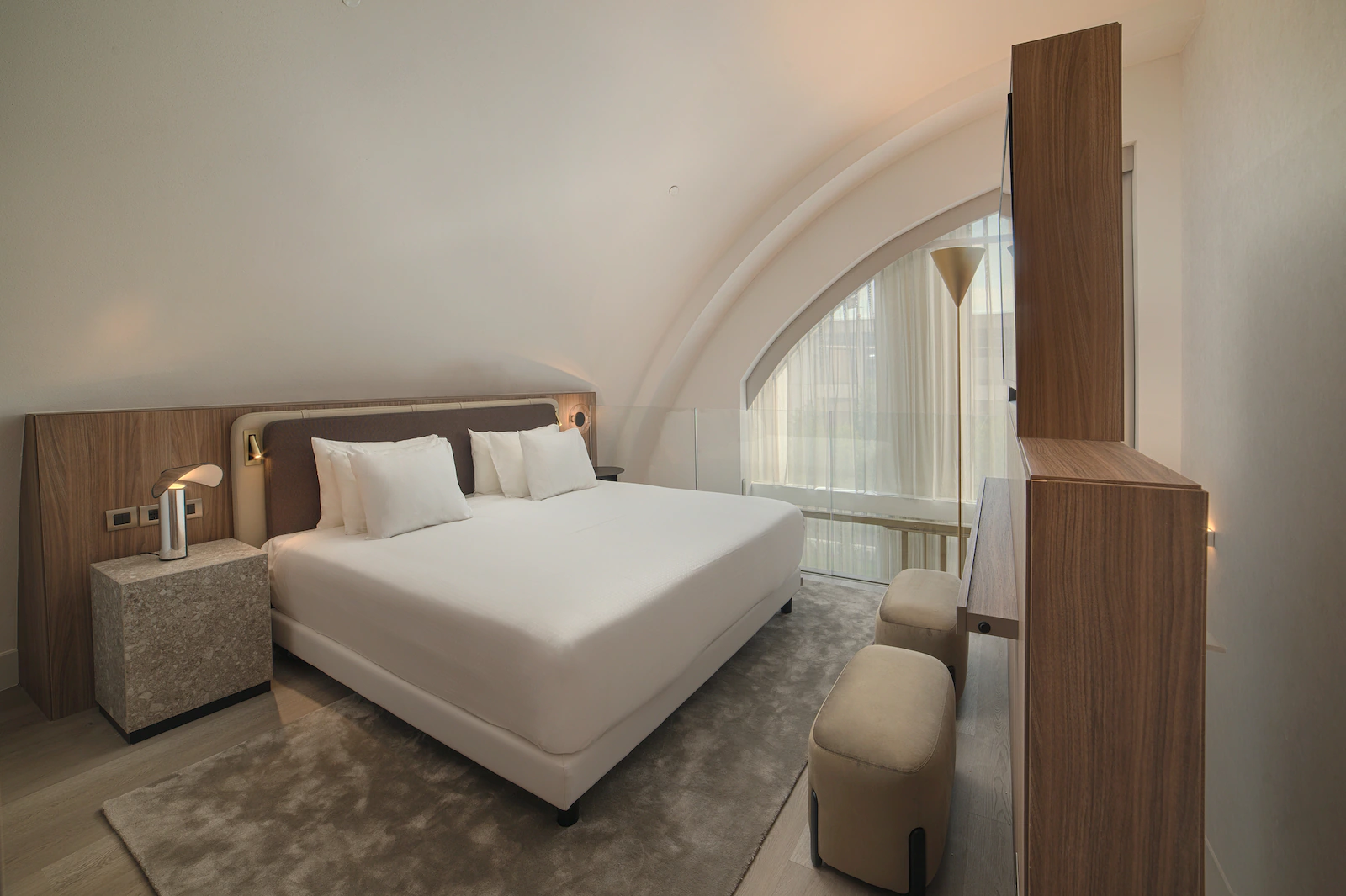
While the Very Low Profile Range would be adequate for most residential attachments of headboards, the NH Collection Milano CityLife Hotel required a heavy duty, flexible solution for its large scale hospitality fit out. Fastmount’s Stratlock® Range was chosen for mounting headboards and wall panels throughout the 185 guest rooms. This provided a robust, easily removable system that allowed for precise alignment and quick access to hidden services.
Working with the hotel’s interior fit out team, Fastmount’s Stratlock® Range was specified for both headboards and wall panelling to ensure a single, consistent mounting system across the project. The adjustability built into Stratlock allowed installers to compensate for minor variations in substrate across all 185 rooms while maintaining consistent panel alignment, and the fully concealed fixing meant housekeeping and maintenance teams could access wall services behind each headboard without visible hardware or repeat callouts for realignment.
Explore Fastmount’s full range of mounting solutions
How to install LED strip lights on a wall