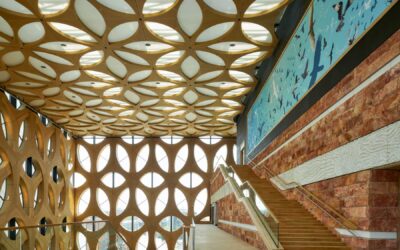
Lightweight ceiling paneling has emerged as the preferred choice for architects and designers who need to balance reduced structural load, rapid installation timelines, and design flexibility without compromising on finish quality or long term performance.
Modern commercial and residential projects face tighter construction schedules, stricter building regulations, and higher expectations for adaptable spaces. Traditional ceiling materials often create challenges with weight limitations, complex installation requirements, and limited flexibility for future modifications. Lightweight ceiling panels address these concerns while opening new possibilities for innovative ceiling design.
Benefits of lightweight ceiling panels
Lightweight panels provide a number of benefits to designers and architects looking to use them in ceilings.
Reduced structural load and design flexibility with lightweight panels
The weight advantage of lightweight ceiling panels creates significant opportunities in both new construction and renovation projects. Reduced structural load means architects can specify ceiling treatments in situations where traditional materials would exceed weight capacity limits. This becomes particularly valuable in heritage buildings, upper floors with load restrictions, or projects where structural reinforcement would add substantial cost.
Beyond basic weight considerations, lighter panels enable design approaches that would be impractical with heavier materials. Suspended ceiling systems, and complex geometries become possible when panel weight doesn’t constrain design intent. Renovation projects especially benefit from this flexibility, allowing substantial aesthetic improvements without structural modifications.
Faster installation and reduced project costs
Installation speed directly impacts project budgets and timelines. Lightweight ceiling panels install significantly faster than traditional ceiling materials, reducing labor costs and shortening construction schedules. Individual panels are easier for installation teams to handle, position, and secure, improving productivity throughout the project.
This efficiency becomes critical in commercial environments where construction must minimize disruption to ongoing operations. Hotels renovating occupied floors, offices upgrading without full closures, or retail spaces refreshing between seasons all benefit from installation systems that work quickly without sacrificing quality.
Improved site safety and easier handling
Lighter materials improve worksite safety by reducing physical strain on installation teams and lowering the risk of handling injuries. Panels that one or two workers can safely maneuver eliminate the need for additional labor or specialized lifting equipment. This safety advantage extends throughout the project lifecycle, making future maintenance or modifications less hazardous.
Easier handling also reduces the risk of panel damage during installation. Traditional heavy materials often suffer edge damage, cracks, or surface scratches during positioning and installation. Lightweight panels prove more forgiving during handling while maintaining structural integrity once installed.
Ceiling panel versatility across commercial and residential applications
Lightweight ceiling panels suit a broad range of project types and design requirements. Commercial interiors including offices, hospitality venues, retail spaces, and healthcare facilities all benefit from the practical advantages these systems offer. The same technology that enables quick installation in commercial projects translates effectively to residential applications where clean installation and minimal disruption matter.
Design versatility also extends to material options. Lightweight wood ceiling panels deliver natural warmth and texture, lightweight beadboard ceiling panels create traditional or coastal aesthetics, and lightweight insulated ceiling panels combine finish quality with thermal or acoustic performance. This range allows designers to select materials based on aesthetic goals rather than being constrained by installation limitations.

Key applications for lightweight ceiling panels
Office environments
Modern office design increasingly emphasizes flexibility and adaptability. Lightweight ceiling paneling supports this modularity by making ceiling modifications practical and affordable. Combined with acoustic properties available in lightweight ceiling panels, they provide a functional as well as aesthetic benefit.
The ability to quickly access ceiling cavities for technology updates, maintenance, or reconfigurations also adds practical value. Ceiling systems that facilitate this access without specialized tools or extensive labor make ongoing building management simpler and less expensive.
Retail spaces
Retail environments demand ceiling solutions that support frequent updates and visual merchandising strategies. Traditional ceiling installations make these changes expensive and time consuming. Lightweight ceiling panels enable retailers to modify ceiling features, integrate new lighting, or completely transform the space without lengthy construction disruptions.
With brands incorporating ceiling features into their marketing campaigns, lightweight panels prove advantageous. Lightweight wood panels for ceiling applications create warmth and sophistication, while painted or finished panels can match specific brand colors and aesthetics. The weight advantage allows ceiling features that would be impractical with traditional materials, including dramatic overhangs or suspended elements that draw customer attention.
Hospitality venues
Hotels, restaurants, bars, and event spaces require ceiling systems that balance aesthetic appeal with practical durability. These environments experience high humidity from kitchens, bathrooms, and climate variations, demanding materials that resist moisture without degrading. Lightweight ceiling panels with moisture resistant properties maintain their appearance and structural integrity in these challenging conditions.
Maintenance requirements in hospitality differ from other commercial applications. Regular cleaning, seasonal décor changes, and periodic refreshing must happen without disrupting guest experiences. Ceiling systems that allow quick panel removal and reinstallation enable property managers to maintain pristine conditions efficiently. This becomes especially valuable in hotels where individual rooms require maintenance while adjacent rooms remain occupied.
Healthcare facilities
Healthcare environments face stringent requirements for hygiene, infection control, and maintenance. Lightweight ceiling panels with non-porous surfaces resist bacterial growth and clean easily with standard healthcare disinfectants. This hygiene advantage proves essential in patient rooms, treatment areas, and surgical suites where infection control directly impacts patient safety.
Maintenance access also becomes critical in healthcare where mechanical systems, medical gas lines, and specialized equipment require regular inspection and servicing. Ceiling systems that facilitate quick access without creating patient disruption or contamination risks support efficient facility management.
Residential applications
Residential renovations particularly benefit from lightweight ceiling panels. Existing structures often have weight limitations that preclude heavier ceiling treatments. Lightweight options enable homeowners to achieve contemporary ceiling designs without structural reinforcement or load concerns.
Lightweight ceiling panels install quickly and cleanly compared to traditional ceiling materials, reducing the time homeowners live with active construction. The materials themselves handle easily, allowing smaller installation teams to work efficiently in residential spaces.

How Fastmount supports lightweight ceiling paneling
Fastmount’s concealed clip systems revolutionize how lightweight ceiling panels attach and perform. The core innovation lies in complete concealment. Unlike traditional ceiling fasteners that remain visible or require finishing work to hide, Fastmount clips stay entirely hidden beneath finished surfaces. This creates clean, uninterrupted ceiling planes that meet contemporary design standards.
Substrate compatibility and versatility
Fastmount systems work with a wide range of panel materials, including lightweight wood ceiling panels, lightweight beadboard ceiling panels, and lightweight insulated ceiling panels. This flexibility allows designers to choose materials based on aesthetic and performance needs rather than fastening limitations. The clips accommodate different panel thicknesses and substrate densities, from thin finished panels to thicker insulated options. This adaptability is especially useful for projects that require different panel types in various ceiling areas.
Non-sequential removal and maintenance access
Traditional ceiling systems create problems when panels require removal for maintenance or modifications. Many designs demand sequential removal where accessing one section requires removing multiple adjacent panels. Fastmount’s clip design enables non-sequential removal, allowing access to any individual panel without disturbing surrounding areas.
This capability makes maintenance a practical exercise. Accessing mechanical systems, tending to damage, or making modifications becomes straightforward rather than needing extensive disassembly. In commercial environments where minimizing disruption matters critically, the ability to quickly remove and reinstall individual panels without specialized tools or extensive labor represents significant value.
Alignment precision and installation efficiency
Achieving perfectly aligned ceiling panels with traditional fastening methods requires significant skill and multiple adjustments. Fastmount systems provide built in alignment precision, ensuring panels sit flush and uniform. This precision improves installation speed while guaranteeing professional results regardless of installer experience level.
The alignment advantage becomes particularly valuable in projects with extensive ceiling areas where cumulative misalignment would create visible problems. Large commercial spaces, continuous corridors, or open plan areas require consistent panel alignment across hundreds or thousands of square feet. Fastmount systems maintain this consistency throughout installation.
Lightweight ceiling panel applications
CWA Kitchen’s Commercial Project, Australia
A commercial project in Australia used Fastmount’s Standard Range to create striking ceiling features that required precise alignment and clean installation. The entrance area needed to mirror the wall treatment while allowing for easy access and maintenance. The lightweight ceiling panels integrated seamlessly with Fastmount systems to achieve both the architect’s vision and the functionality required
Elwood House, Australia
Fastmount’s Standard Range was used in the Elwood House project to execute a flawless, geometric, floor to ceiling design. Non-sequential installation, simple removability, and perfect alignment as integrated features of Fastmount systems, were a key factor in the success of the project.
See more architectural projects using Fastmount’s revolutionary clip systems.
The future of commercial and residential ceiling design
Quality ceiling solutions are essential in achieving professional results in both commercial and residential applications. While traditional ceiling materials and fastening systems may appear adequate initially, they often create long term challenges with weight restrictions, visible hardware, installation complexity, and limited adaptability.
Lightweight ceiling panels address contemporary design requirements while opening possibilities that weren’t practical with heavier alternatives. When combined with concealed fixing systems like Fastmount’s clip ranges, these materials allow architects and designers to achieve their vision without compromise.
Explore Fastmount’s full range for ceiling applications or contact our team for guidance on your specific project requirements. US architectural customers can order directly from our e-commerce store.
Other resources
Commercial ceiling panels that balance performance, compliance, and design