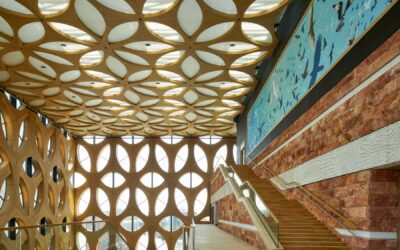
The range of wall materials and construction methods available to architects, designers, and millworkers is wider than ever, and includes everything from traditional masonry through to prefabricated panel systems built off site. This guide covers how wall materials are classified, the most common options in use, current trends, and how they compare on performance. It also covers how panels are fixed to the wall because this is an important decision that has time and cost repercussions during the build, and beyond it to the life of the project. This is where Fastmount’s concealed clip systems shine, offering a fixing method built specifically for the demands of modern panel installation.
Wall assembly autonomy: Structural vs. Finish Layer
Every wall is made up of two components working together. Understanding each element is the starting point for any wall materials and construction decision.
Structural or substrate materials carry the load and hold the building up. This category includes concrete, brick, steel framing, and timber framing. These materials are chosen early, driven by engineering requirements, local codes, and budget.
Finish or cladding materials are applied over the structure. This is where drywall, decorative panels, veneer, and cladding systems come in, and it’s the layer that most projects are actually choosing between once the structural decisions are locked in.
This distinction matters because it determines what a panel or fixing is attached to. A concealed clip system like Fastmount’s for example, an adhesive, or a mechanical fixing all perform differently depending on whether they’re going into masonry, timber framing, or a metal stud wall.
Most common wall materials in residential and commercial buildings
The most common wall materials used across residential and commercial buildings fall into four categories: drywall/gypsum board, wood paneling, masonry, and metal or composite panel systems. Structural materials like concrete framing sit behind these as the substrate, chosen largely by engineering requirements rather than design intent. Most specification conversations happen in regard to the finish and panel materials.
Drywall / Gypsum Board
Drywall remains the standard interior wall material across residential and commercial buildings. It’s cost effective, fast to install, and easy to finish, which is why it’s still the default for most partition walls. Its main limitation is that it offers little in the way of texture or acoustic performance on its own, which is part of why designers increasingly layer other wall materials over or instead of it.
Wood paneling (shiplap, slat wall panels, and veneer)
Wood paneling covers a wide range of looks and applications, from traditional shiplap through to slat wall panels and fluted wall panels that have become a defining feature of modern interiors. Slat and fluted profiles in particular are popular in both residential feature walls and commercial hospitality settings where they add texture and warmth without the cost of solid timber. Veneer panels offer a similar aesthetic at a lower weight and cost, making them a common choice for larger commercial fit outs.
Masonry (brick, stone, and block)
Brick, stone, and block are used both structurally and as a finish material, particularly in commercial and hospitality projects where an exposed masonry look is part of the design intent. Masonry finishes are valued for durability and a sense of permanence, though they add weight and typically require more specialised installation than panel based systems.
Metal and composite panel systems
Metal and composite panels are common in commercial wall materials specification, particularly for exterior cladding and high traffic commercial interiors. These systems are valued for consistency, low maintenance, and the ability to be manufactured to tight tolerances, which makes them a natural fit for prefabricated and panel construction approaches.

Latest trends in wall materials for modern architecture
Several clear trends are shaping how architects and designers are specifying wall materials.
Eco-friendly and natural materials
Designers are increasingly choosing sustainable wall materials over synthetic alternatives, driven by both client demand and a growing focus on indoor air quality. Natural finishes, low-VOC products, and materials with a lower environmental footprint are moving from a niche request to a standard specification criterion.
Textured, tactile finishes
Flat, smooth surfaces are giving way to walls with visible grooves, wood strips, and raw concrete looks. Fluted wall panels and slat wall panels are a large part of this shift, giving designers a way to add depth and tactility without the cost or weight of solid material.
Acoustic wall panels
Acoustic wall panels that absorb sound while still looking good are increasingly popular in offices and hospitality spaces, where open plan layouts and hard surfaces create noise problems that a purely decorative finish can’t solve. This dual function, aesthetic and acoustic, is becoming an expected feature rather than an add on.
Pre-made wall panels
More projects are moving toward panels built off site in a workshop and then installed on location. This shift toward prefabrication is closely tied to how those panels get fixed once they arrive on site. Panels that are pre-drilled for a concealed clip system in the workshop reduce both labor cost and the risk of panel damage during the build, since the fixing work happens under controlled conditions rather than on an active job site. This is exactly the kind of off site, pre-drilled installation Fastmount’s clip system is designed for.
Insulation and durability: How wall materials compare
The table below compares common wall materials on the factors that matter most for specification.
| Method Material | Heat Resistance | Durability/ Life Span | Typical Application | Relative Cost |
| Drywall / Gypsum board | Low, requires added insulation | Moderate, 20-30 years and possibly longer. Needs maintenance from moisture, impact, and occupancy. | Interior partitions/walls, residential and commercial | Low |
| Wood paneling (shiplap, slat, veneer) | Low to moderate, performance depends on backing wall and insulation | Moderate to high, 20-40 years depending on finish and how it’s protected and maintained | Feature walls, hospitality/ commercial and residential interiors | Moderate to high |
| Masonry (brick, stone, block) | High thermal mass but may be low without insulation | Very high, 50+ years subject to exposure and maintenance | Structural and exterior finish, commercial and residential | Moderate to high |
| Metal / Composite panel systems | Moderate, depends on core material | High, 25-40 years subject to coating, corrosion, and exposure | Commercial cladding and high traffic interiors | Moderate to high |
| Concrete / ICF (structural) | High with insulated core | Very high, 50+ years | Structural walls | High |
Eco-friendly and sustainable wall material options
Sustainable wall materials are becoming a standard specification rather than an optional extra. Cork offers a renewable, naturally acoustic option for interior finishes, while reclaimed/FSC-certified timber gives designers the warmth of wood paneling with a lower environmental footprint. Low-VOC panel products address indoor air quality directly, an increasingly common client requirement in commercial and hospitality projects. Recycled-content composites round out the category, offering the consistency of manufactured panels with a reduced environmental impact. Each of these is an example of the main sustainable wall material options currently available to architects and designers.

Specifying and installing wall panel systems
Material choice is only half the decision when providing specifications for a project. How a panel is fixed to the wall has a direct impact on cost, project length, and long term performance. There are three main ways panels get fixed to a wall, and they perform very differently on the factors that matter to a professional installer.
Mechanical fixing
Screws, nails, and other mechanical fixings are straightforward and familiar, but they leave visible fixing points, and they penetrate the panel face directly. Rework means removing and patching, which adds time and risk to any future maintenance or reconfiguration.
Adhesive fixing
Adhesives give a clean surface free from visible fixings, but they’re permanent. This means panel removal for maintenance, servicing, or reconfiguration will likely involve damaging the panel, the substrate, or both, which makes adhesive a poor fit for any wall material and construction job where future access is needed.
Concealed clip systems
Concealed clip systems solve the problem of both mechanical and adhesive fixings. Panels click into place on a hidden clip, leaving no visible fixings and no adhesive bond, so they can be removed by hand and reinstalled without damage. Fastmount’s panel mounting clips are built for exactly this: consistent, repeatable removal, since every panel goes on and comes off the same way regardless of who’s installing it. For architects and millworkers specifying architectural panel systems, that consistency is what makes a panel mounting system a credible alternative to mechanical fixing or adhesive, particularly on projects where panels are pre-drilled off site and need to install cleanly first time.
FAQ
What are the most common types of wall materials used in residential buildings?
Drywall is the standard for interior partitions, with wood paneling, masonry, and metal or composite panels used for feature walls and exterior finishes depending on the project.
What are the latest trends in wall materials for modern architecture?
Eco-friendly and natural materials, textured and tactile finishes like fluted and slat wall panels, acoustic wall panels, and pre-made panels built off site and installed on location are all popular.
What eco-friendly wall materials are best for interior design?
Cork, reclaimed/FSC-certified timber, low-VOC panel products, and recycled-content composites are among the most commonly specified sustainable wall material options.
How are wall panels attached to different wall material substrates?
Panels are typically fixed using mechanical fixings, adhesive, or concealed clip systems. Concealed clip systems, such as Fastmount’s, offer the most consistent results across different substrates and allow panels to be removed and reinstalled without damage.
Explore Fastmount’s complete product range or see how Fastmount works with architects to find the right concealed fixing solution for your next project.
Other resources
Innovative architectural panel solutions
How to professionally panel a curved wall
Why you shouldn’t use French cleats for removable wall panels