
Plywood ceilings are valued for their warmth, acoustic performance, and natural look without the weight or cost of solid timber. But specifying a plywood ceiling also means thinking about how that panel will be installed. The method chosen will determine whether the finished ceiling looks clean and holds up over time, or shows joints, sagging, and fixing marks within a few years.
This guide covers plywood ceiling ideas, how plywood compares to drywall for ceiling applications, and the mounting methods available for plywood ceiling installation, including where a concealed clip system like Fastmount’s SLX Range fits in.
Plywood ceiling installation vs. plywood manufacturing
Plywood manufacturing and plywood ceiling installation are two distinct topics. How plywood itself is manufactured, meaning the core construction, veneer layup, and the adhesives bonding the layers together, is a separate topic from how a finished plywood panel gets mounted to a ceiling substrate. This article is about the latter — plywood ceiling installation.
This is an important distinction for anyone specifying plywood ceiling panels. The SLX Range referenced throughout this guide is a concealed clip system built specifically for mounting finished plywood panels to ceilings and walls. It has no connection to how the plywood sheet itself is produced. If you’re researching plywood ceiling installation, the SLX Range is a fixing method to consider once you already have your panels in hand.
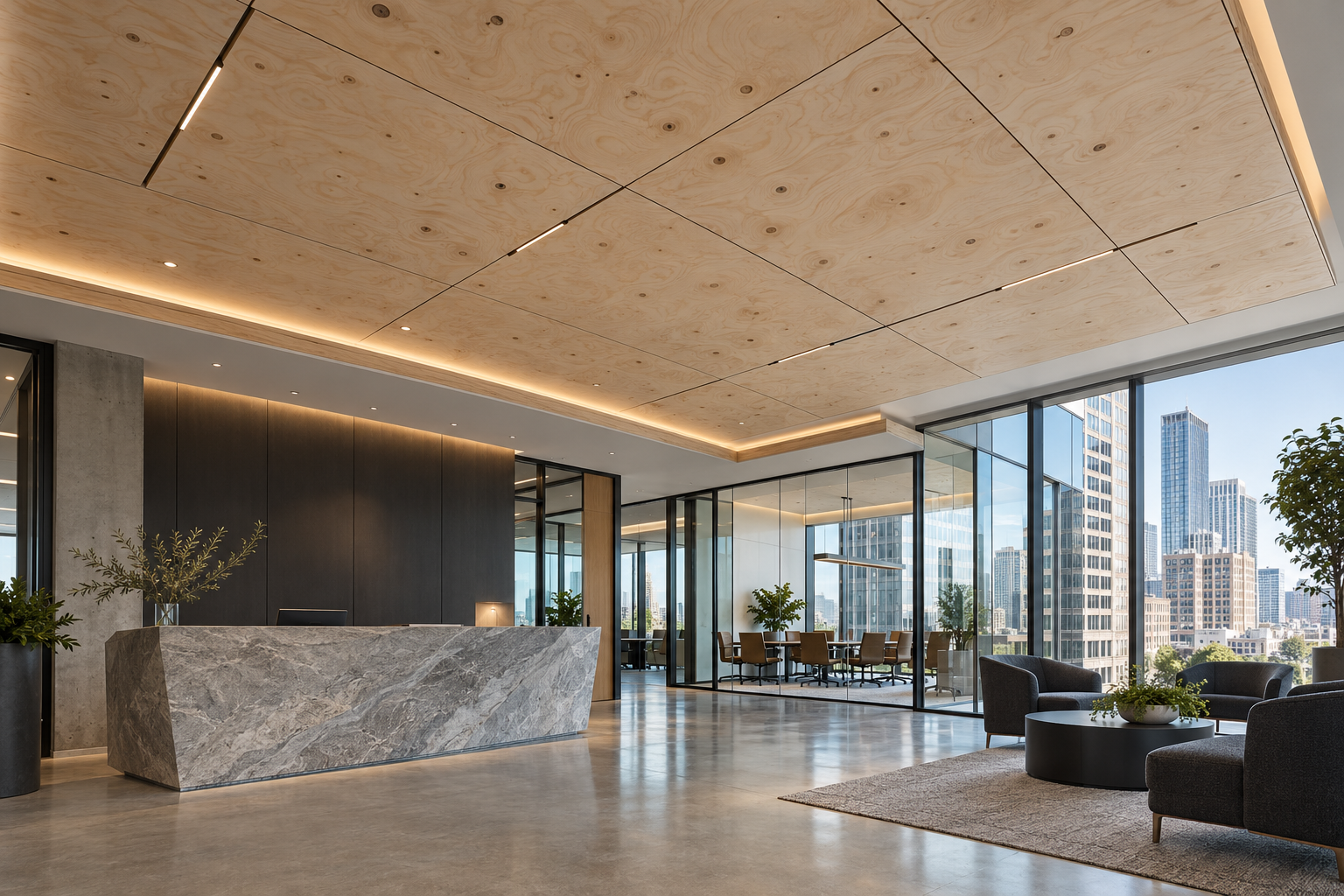
Plywood ceiling ideas for architects and designers
Panel layout, joint lines, and finish all shape how the ceiling ends up looking in a space, and the right approach often depends on the setting.
Panel layout and joint lines
Large format plywood ceiling panels with tight, consistent joint lines look like a single continuous plane, which suits hospitality and retail interiors going for a calm, architectural look. Smaller panels with a visible grid pattern can work well in offices or workspaces where some rhythm and texture is wanted overhead.
Finish and stain options
Plywood ceiling panels can be finished in a range of ways, from clear sealed to show the natural grain, through to stained or painted finishes that tie into a broader material palette. High end residential and boutique hospitality projects often lean toward a natural or lightly tinted finish to keep the warmth of the timber visible.
Acoustic and lighting integration
Plywood ceiling design often needs to accommodate acoustic treatment and integrated lighting. Perforated or slatted plywood panels can address sound absorption, while panel layout needs to be planned around light fittings, sprinklers, and other services from the start.
Across all of these plywood ceiling ideas, the mounting method has a direct impact on the finished result. A concealed fixing keeps joints and panel edges clean, with no visible screws or clips interrupting the design. This is one of the reasons mounting method deserves as much attention as the panel finish itself.
Plywood vs. drywall or plasterboard for ceilings
Plywood is increasingly specified as an alternative to drywall or plasterboard on ceilings, and it’s a reasonable question to ask which is the better fit for a given project.
Weight
Plywood is significantly heavier than plasterboard per square meter. A standard 18mm plywood ceiling panel carries considerably more load than an equivalent sheet of drywall, which has a direct bearing on what fixing method is appropriate.
Appearance
Drywall is a blank canvas, finished with paint or texture. Plywood brings a visible timber grain and warmth that drywall can’t replicate, which is exactly why it’s specified where a natural material finish is wanted overhead.
Durability
Plywood is more resistant to knocks and impact than plasterboard, and holds up better in environments with vibration or movement, such as in marine and recreational vehicle interiors.
Fixing requirements
Drywall is typically screwed directly to joists or a ceiling grid, a straightforward job due to its light weight. Plywood’s greater weight means the fixing method carries more responsibility. Overhead loading isn’t forgiving, and so the mounting approach needs to be considered.
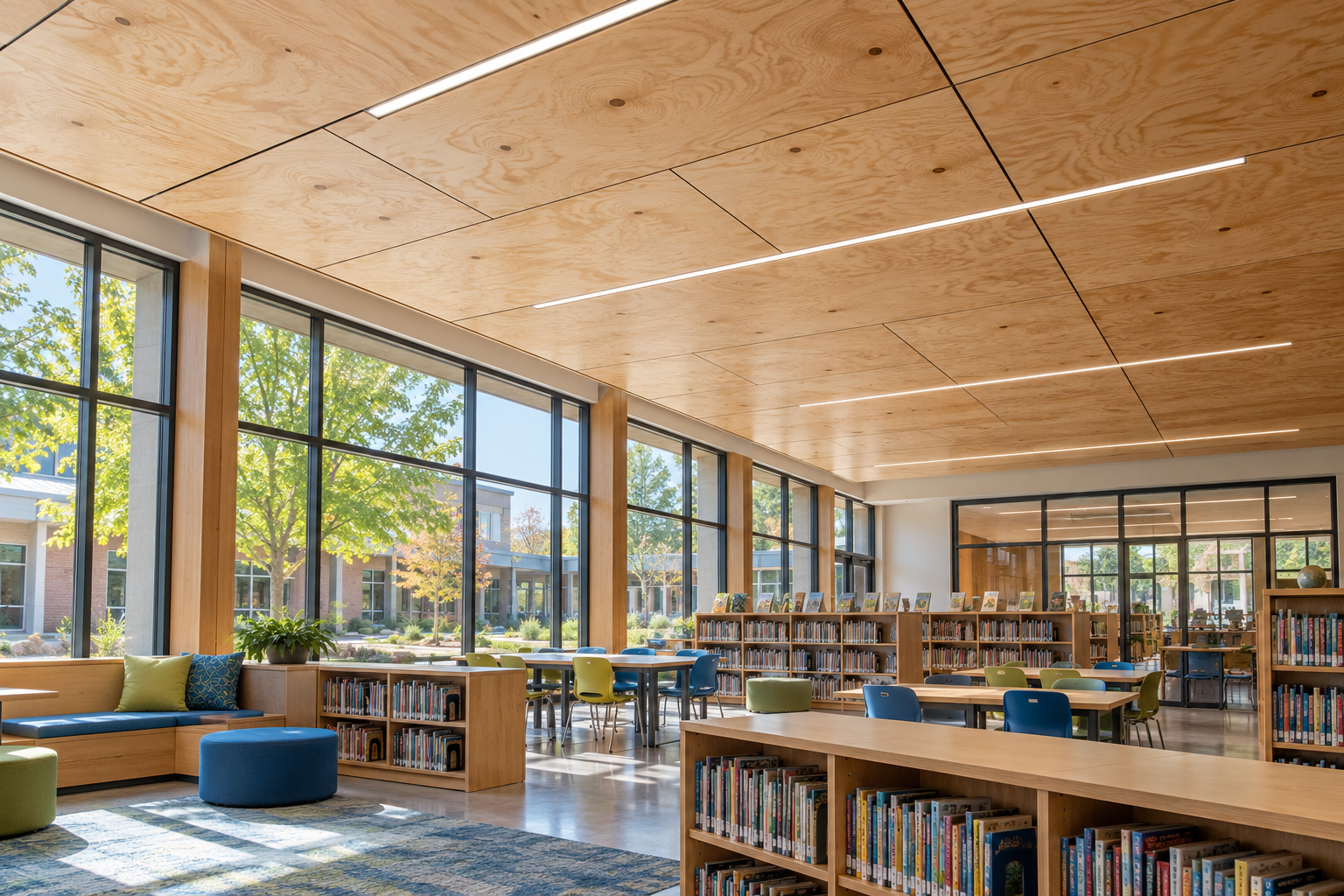
Mounting methods for plywood ceiling panels: Adhesive and mechanical fixings vs. the SLX Range
Adhesive fixing
Construction adhesive is a common default for plywood ceiling installation, bonding the panel directly to the substrate. It’s straightforward to install and can produce a flush finish, but it’s a one-way process. Once the adhesive cures, the panel is fixed in place permanently. There’s no access to the space above without damaging the panel, and any error in initial panel placement is difficult to correct.
Screws and batten fixing
Fixing plywood panels to a batten framework with screws is a more traditional mechanical approach. It allows for some adjustment during installation and is a familiar method for most installers. The trade-off is visible fixing points, unless screws are carefully countersunk and filled, which adds time and can still show through certain finishes, particularly light or clear coated plywood.
The SLX Range
For ceiling applications specifically, mechanical fixing has advantages that adhesive can’t match, and this is where the SLX Range comes in. Ceiling mounted panels carry overhead loading that needs to be properly rated, not just bonded with the hoped it will stay up, and most ceilings also need to allow access above the panel for services or maintenance down the track. A fixed adhesive bond, well suited to some wall applications, isn’t the right answer for these two requirements. The SLX Range is a concealed clip system engineered to address exactly this: rated overhead holding power with a panel that can still be removed without damage.
What sets the SLX Range apart for plywood ceiling mounting
The SLX Range was engineered with the specific demands of ceiling mounted panels in mind, not adapted from a wall fixing system as an afterthought. As such, it has a number of advantages providing a rated, adjustable, and reversible mounting system.
Rated for overhead loading
Each SLX clip has a defined load rating, so panel weight can be matched to the correct clip specification for a given plywood thickness and panel size. This takes the guesswork out of overhead fixing in a way that adhesive simply can’t.
Adjustability for uneven substrates
Ceiling substrates are rarely perfectly level or flat. The SLX Range allows for adjustment during installation to compensate for these inconsistencies, so the finished plywood ceiling sits flush rather than highlighting every dip in the substrate above.
Non-destructive removal
Panels fixed with the SLX Range can be taken down and reinstalled without damage, giving straightforward access to wiring, ductwork, or other services above the ceiling whenever it’s needed. An adhesive bonded panel offers no equivalent option once it’s set in place.
Fire-rated options
Fire-rated SLX clips are available for ceiling applications where local building codes require it, which matters for commercial and hospitality fit outs where compliance can’t be an afterthought.
How to mount plywood ceiling panels using the SLX Range
Fastmount’s system for mounting plywood ceiling panels using the SLX Range is efficient and produces professional results.
Marking clip positions: Clip positions are marked out on both the ceiling substrate and the back of the plywood panel, spaced according to panel size, weight, and the relevant SLX clip rating. Getting this layout right at the marking stage is what makes the rest of the installation straightforward.
Fixing the female clips to the substrate: The female clip component is fixed to the ceiling substrate at the marked positions, providing the anchor point the panel will engage into.
Fixing the male clips to the panel: The corresponding male clip component is fixed to the back of the plywood panel, aligned to match the substrate layout. There are templates to assist with this.
Engaging the panel: The panel is lifted into position and engaged onto the substrate clips, where it locks securely into place. No adhesive, no visible fixings, and the panel can be released again by hand whenever access is needed.
This sequence is designed to fit naturally into a standard fit-out project, without demanding specialist tools or trade skills beyond what an experienced installer already brings.
FAQ
How do you install plywood on a ceiling?
Plywood ceiling installation can be achieved using adhesives or screws, however Fastmount’s SLX Range offers a superior alternative that leaves no visible fixing, allows for adjustment and removal without damage. The SLX Range is also load and fire-rated.
What are some plywood ceiling ideas?
Plywood ceiling ideas worth considering at specification stage include large format panels with minimal joint lines for a continuous look, smaller panels laid in a grid for added texture, and perforated or slatted plywood where acoustic performance is a priority. Finish options range from clear sealed to stained, depending on how the ceiling needs to sit within the wider material palette. Whichever direction is chosen, a concealed mounting method such as the SLX Range keeps joints and fixings out of view, letting the panel design shine.
Can plywood be used instead of drywall or plasterboard on ceilings?
Yes, plywood is a viable alternative to drywall or plasterboard on ceilings, offering greater durability and a natural finish that plasterboard can’t provide. The main consideration is weight. Plywood is considerably heavier, so the fixing method needs to be rated for overhead loading rather than relying on a standard drywall fixing approach. This is where a mechanical system like the SLX Range becomes relevant, since it’s rated specifically for the loads plywood ceiling panels introduce.
What is the best way to mount plywood ceiling panels?
For ceiling applications, the SLX Range is the recommended way to mount plywood panels. It’s rated for overhead loading, adjustable to compensate for out of level substrates, and allows panels to be removed without damage for access to services above the ceiling. Adhesive and screw fixing remain options, but neither matches the combination of load rating, adjustability, and non-destructive removal that the SLX Range offers for plywood ceiling installation specifically.
Explore the SLX Range, or see how the system fits into wider architectural panel systems. Fastmount’s full panel mounting system range covers ceiling, wall, and cladding applications across commercial and architectural projects.
Other resources
Modern interiors with lightweight ceiling panels
Commercial ceiling panels balancing performance, compliance, and design